“
★★★★★
Lance and his team have been great to work with! They have great turnaround times, high professionalism and a consistent product. Highly recommend!
Brian Smith· Google
Your parking lot's asphalt looks faded and gray where it used to be deep black. The surface feels rough under your shoes and you can see small cracks starting to spider out from the edges. Abco Pavement Services handles sealcoating work across Cincinnati, Hamilton, and the surrounding Ohio, Kentucky, and Indiana areas.
Asphalt that needs sealcoating shows up as faded gray pavement instead of the rich black it had when new. You'll see the aggregate stones starting to show through the surface and small hairline cracks forming at the edges or where water pools. Most commercial lots need fresh sealcoating every 3-5 years depending on traffic volume and weather exposure.
Without proper sealing, water seeps into those small cracks and expands when it freezes. Your maintenance costs go up because you're patching bigger holes instead of preventing them. Customers and tenants notice when the property looks worn down, and other contractors will charge more for work on deteriorated pavement.
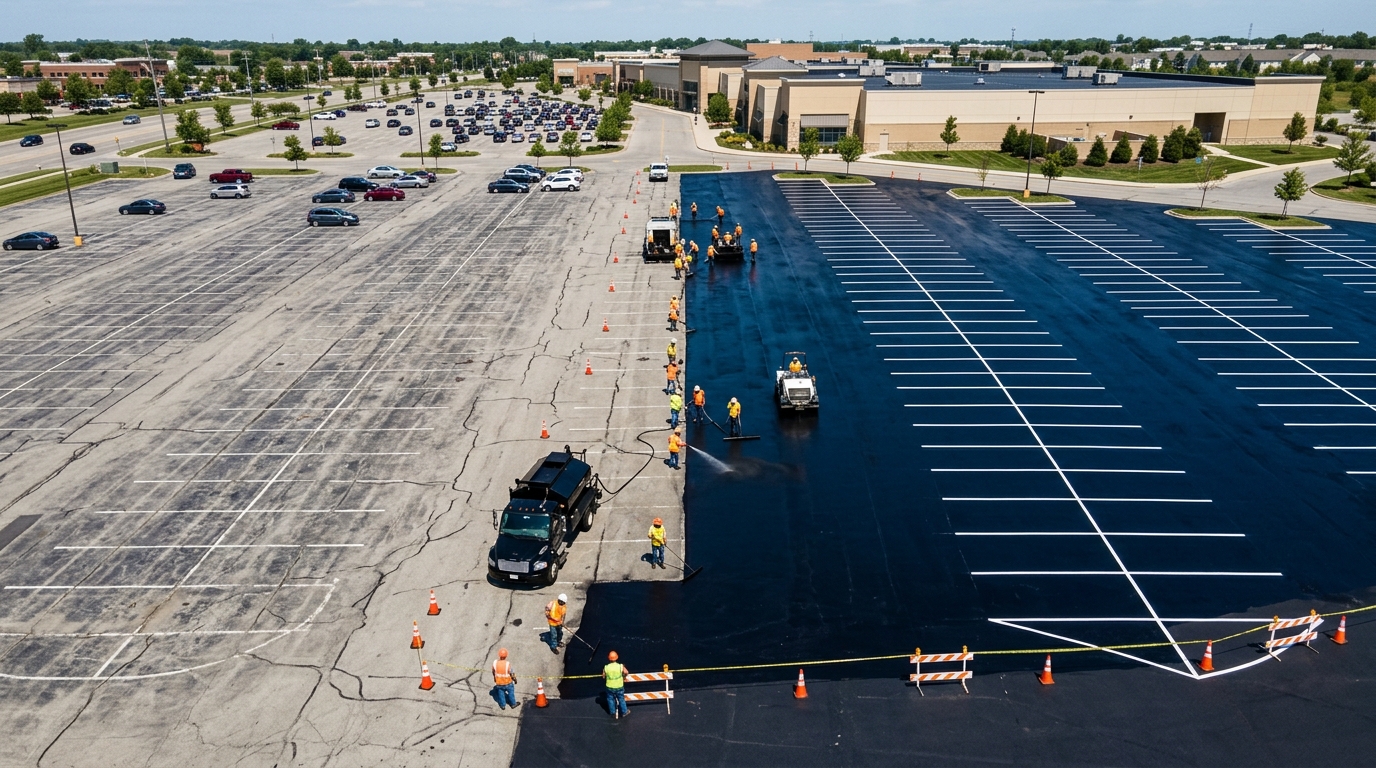
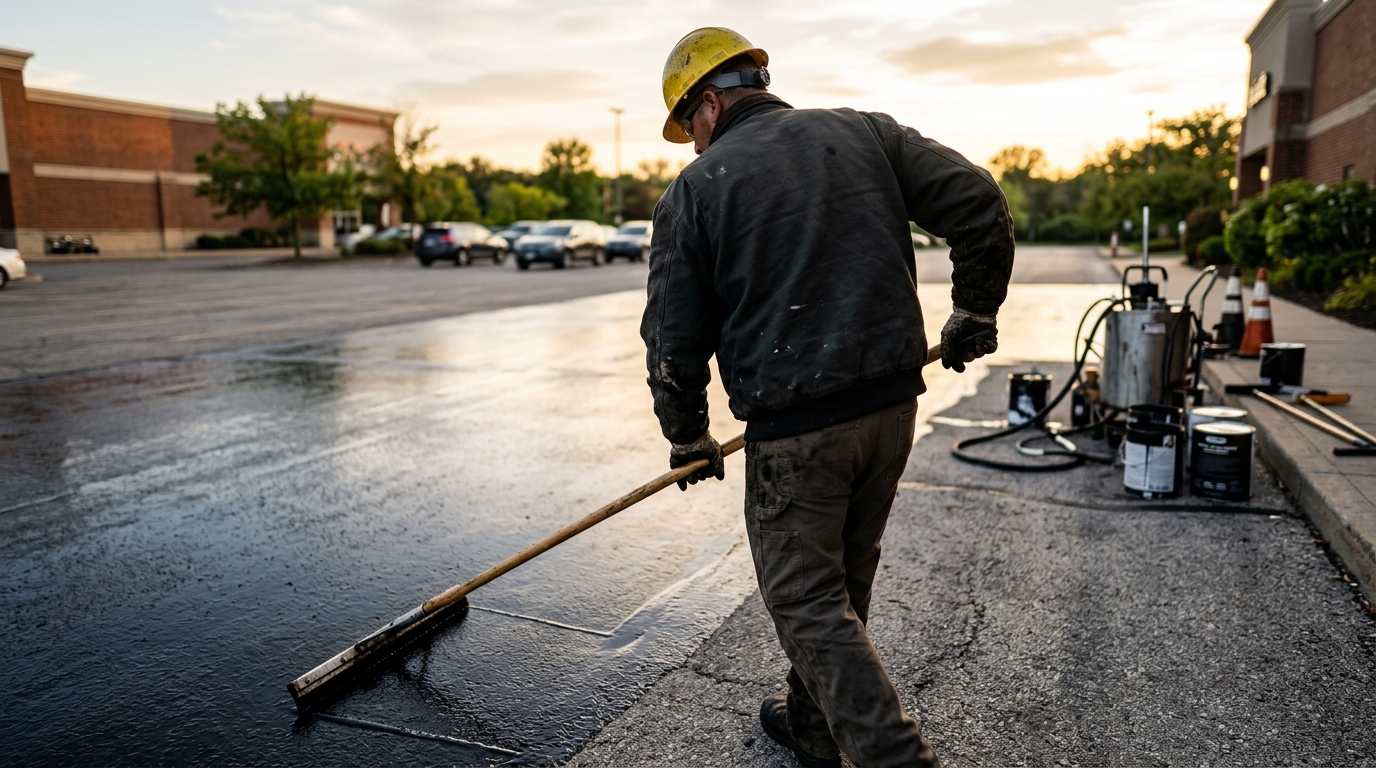
Abco Pavement Services power washes the entire surface first to remove all oil stains, dirt, and loose debris. The crew fills every crack with hot rubberized filler that stays flexible through freeze-thaw cycles. Two thin coats of commercial-grade sealer go on with squeegee application for uniform thickness and coverage. Fresh striping and parking line painting happens after the sealer fully cures, usually within 24-48 hours.
Your parking lot will have that deep black professional appearance that makes a good first impression. The sealed surface sheds water properly and resists oil stains from normal vehicle traffic. You'll have 3-5 years before needing attention again, and the pavement underneath stays protected from weather damage.
The parking lot looks worn out and unprofessional when customers pull up. Water sits in the small cracks after it rains and you know those will turn into bigger problems when winter hits. Your property just doesn't look as sharp as it did a few years ago.
Your parking lot is showing wear but you're not sure if you need the full repaving treatment or if sealcoating will buy you more time. You don't want to waste money on the wrong fix.
Sealcoating works on pavement that's structurally sound but faded or lightly worn. If you have cracks wider than a quarter inch, potholes, or soft spots, sealcoating won't help. Get the base checked first.
Every time it rains, water sits in your parking lot for hours or days. It's creating puddles, ice patches in winter, and making the pavement deteriorate faster.
Standing water means your drainage is failing or never existed. You need proper grading and drainage systems installed before water damage destroys your pavement. Fix drainage first, then address any pavement damage.
Your parking lot has potholes and loose chunks of asphalt. You're worried someone will trip and sue you, or damage their car and blame you for it.
Yes, deteriorated pavement creates liability risk. Document the damage, put up temporary warning signs or cones around the worst spots, and get repair estimates immediately. Don't ignore it and hope for the best.
You need to sealcoat your parking lot. You got a few quotes and they're all over the map. You're not sure what's reasonable or why prices vary so much.
Sealcoating cost depends on lot size, surface condition, and coating quality. Cheap jobs use watered-down sealer that fails in a year. Get quotes that specify sealer type and application thickness. Two thin coats last longer than one thick coat.
Your parking lot looks okay but not great. You're not sure if it's time to sealcoat or if you should wait. You don't want to waste money doing it too early or too late.
Sealcoat new asphalt after 90 days to let oils cure. After that, sealcoat every 2-3 years depending on traffic and weather exposure. If you can see aggregate stones through the surface, you waited too long.
You need to sealcoat your lot. The contractor is asking if you want coal tar or asphalt emulsion. You have no idea what the difference is or which one to pick.
Coal tar sealer lasts longer and resists gas and oil better but costs more and has environmental restrictions in some areas. Asphalt emulsion is cheaper and more eco-friendly but needs reapplication sooner. Check local regulations first, then decide based on your budget and traffic type.

Most commercial lots need fresh sealcoating every 3-5 years depending on traffic volume and weather exposure. We can assess your pavement during a site visit to recommend the right timing for your property.
We power wash the entire surface to remove oil stains, dirt, and loose debris, fill every crack with hot rubberized filler, apply two thin coats of commercial-grade sealer with squeegee application, and finish with fresh striping and parking line painting after the sealer cures.
We serve Cincinnati, Hamilton, and the surrounding areas of Ohio, Kentucky, and Indiana. Contact us to confirm we cover your specific location.
